
How Are Custom Logo Flags Printed in Full Color?
Full-colour custom logo flag printing begins with a usable design file and a clear description of the finished display. A suitable digital textile process can reproduce multicolour artwork, but the final result also depends on the base cloth, colour workflow, print settings and finishing. To obtain a consistent company identity, identify what needs to match and approve it on the actual textile before a larger rollout.
Send the best logo source
A vector master is preferable for a logo that must appear at several sizes. Include the approved brand guide and any licensed photographs used in the design. A low-resolution screenshot may require redrawing and cannot reveal detail that was never present. Clearly identify the correct version of the emblem and provide text as an approved spelling reference, particularly when several language versions exist.
Design for a moving surface
A flag is rarely seen as a perfectly flat rectangle. Keep the important emblem clear of the hoist, seams and pole pocket, and avoid overloading the layout with contact details. Thin strokes or small slogans may disappear at distance. For a range of table, pole and shaped flags, prepare format-specific arrangements while retaining the same approved identity elements.
Agree how colour will be judged
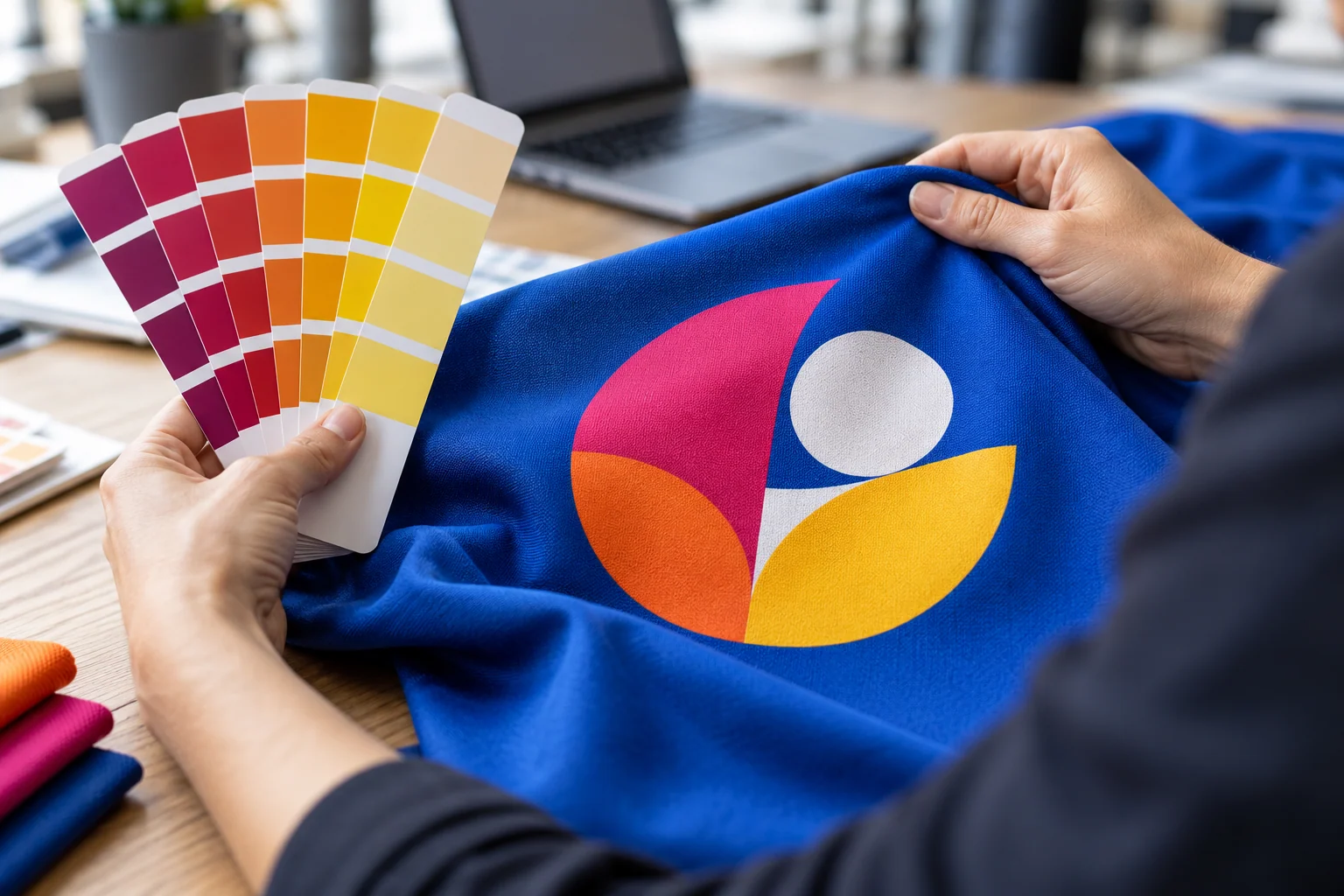
Provide physical or recognised brand colour references when possible and identify the most important colours. A screen preview is helpful for layout but cannot guarantee the same appearance on every textile. Ask for a printed sample in the proposed material where matching matters. View it under relevant light and record the approval reference so repeat orders have a clear starting point.
Confirm the reverse treatment
A multicolour emblem can remain recognisable from the reverse even when mirrored, but words and directional details need separate review. Explain whether both sides must read independently. Check the rear appearance and any show-through on the sample. Different constructions can change the weight and the supporting system’s requirements, so agree the whole product rather than adding a second face as an unexplained upgrade.
Create a repeatable order record
List the product SKU, finished size, textile, attachment arrangement and artwork version for every flag type. For branch networks, name variants by location and keep quantities separate. Send this schedule to Orient Uniforms FZE and ask the quotation to confirm the materials and approval stages. Retain the final proof and a sample reference together; consistency is easier to manage when later orders do not depend on memory or a photograph alone.
Questions & answers
Can a photograph be included with a logo?
Discuss the source image quality and viewing distance. The file must also be cleared for commercial use.
Will the same file look identical on every fabric?
Not necessarily. Textile texture, base colour and the print workflow can change the appearance, so compare relevant samples.