
Double-Sided vs Single-Sided Flags: Which Should You Buy?
The main reason to choose a double-sided flag is usually to make each face read correctly on its own. A single-layer flag may show a mirrored image on the reverse. An independently printed front and back can solve that readability problem, but the construction can add weight and change how the cloth moves. Decide around the audience and display system rather than treating double-sided as an automatic upgrade.
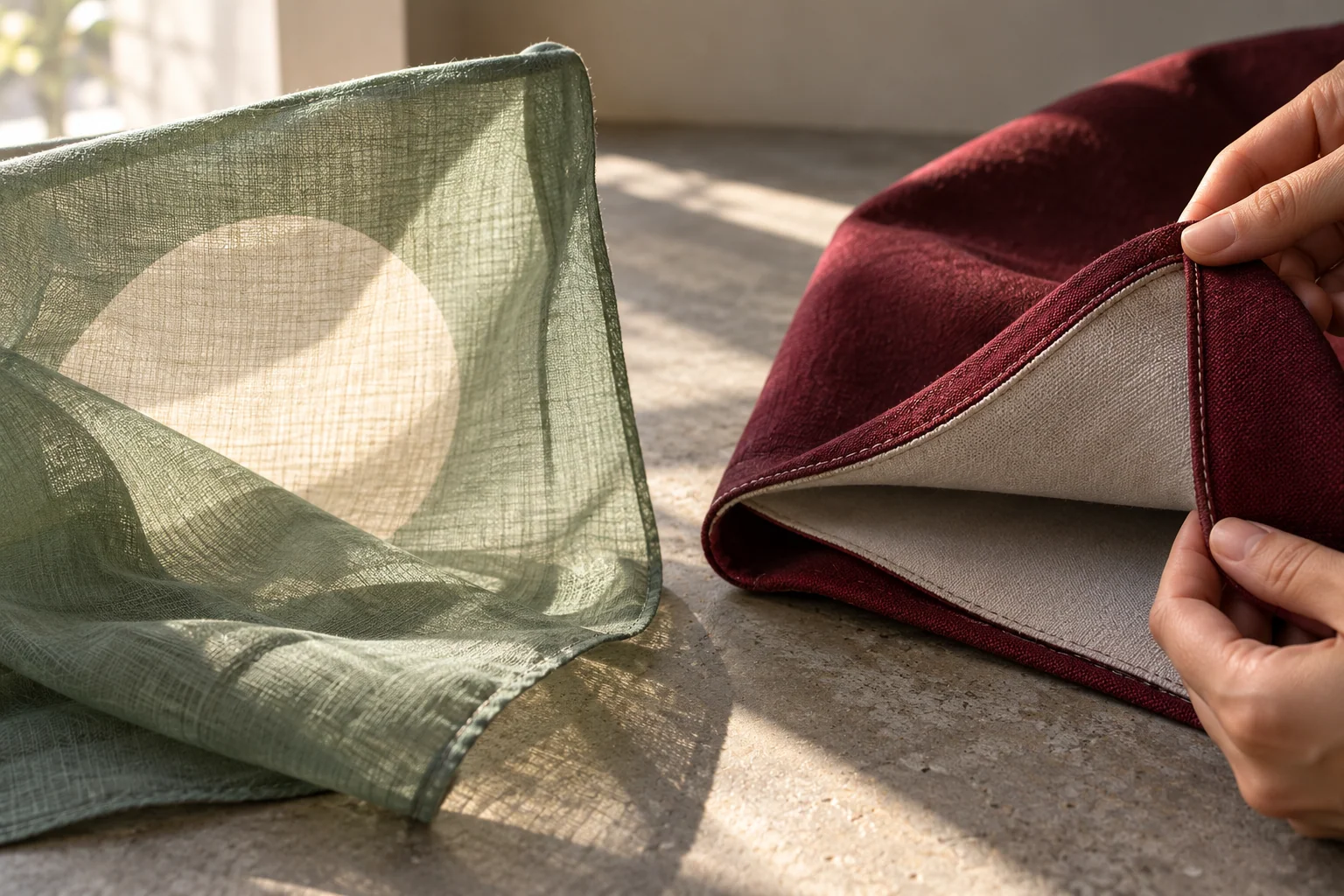
Begin with the viewing directions
Map where people approach. A flag against a wall may have one principal face; a forecourt or event walkway may expose both sides. Check whether the design contains letters, a number or a directional symbol that becomes misleading in reverse. An abstract company emblem may be acceptable when mirrored, while a destination message might need an independently arranged rear face.
Clarify the exact construction
Double-sided can be used loosely in product descriptions. Ask whether the proposal means one layer with print visible through it or two independently printed faces, and whether a separator is included. Request a cross-section explanation or sample when necessary. Record the construction in the quote so there is no uncertainty about rear readability or show-through after production.
Assess movement and hardware
Additional layers can change the finished cloth’s weight, drape and response to movement. The pole, fittings and any shaped frame must accept the proposed graphic. Do not order a thicker replacement for an existing kit on appearance alone. Provide the frame model and manufacturer instructions where possible, and let a competent installer resolve support questions for exposed or elevated displays.
Compare the actual cost and use
Compare prices only after the dimensions, material, attachments and construction are aligned. An event used briefly indoors has different priorities from a regularly flown outdoor corporate display. Ask how the flag should be handled and stored, and consider whether independent readability adds value at that location. A simpler single-layer product may satisfy a particular design without a second readable face.
Approve the version you need
Submit front and reverse artwork, not an assumption that the designer will know how the emblem should turn. Include the product SKU, quantity, location and any existing hardware. Ask Orient Uniforms FZE to confirm the proposed construction and sample approval requirements. Inspect the sample from both sides, against the intended background where practical, before authorising a larger coordinated order.
Questions & answers
Does double-sided mean the same thing at every supplier?
No. Ask for the layer arrangement, reverse readability and any separator to be described explicitly.
Should every outdoor flag be double-sided?
No. The artwork, viewing directions, movement and supporting system determine whether that construction is useful and appropriate.