
Flag Manufacturer vs Flag Trading Company: What Is the Difference?
A flag manufacturer carries out production work, while a flag trading or supply business may source products from production partners. In practice, a business can perform some processes itself and arrange others externally. The label alone does not tell a buyer whether the final flag will meet the brief. Ask who is responsible for the specification, proofing, production control, inspection and communication, and make those responsibilities clear in the written order.
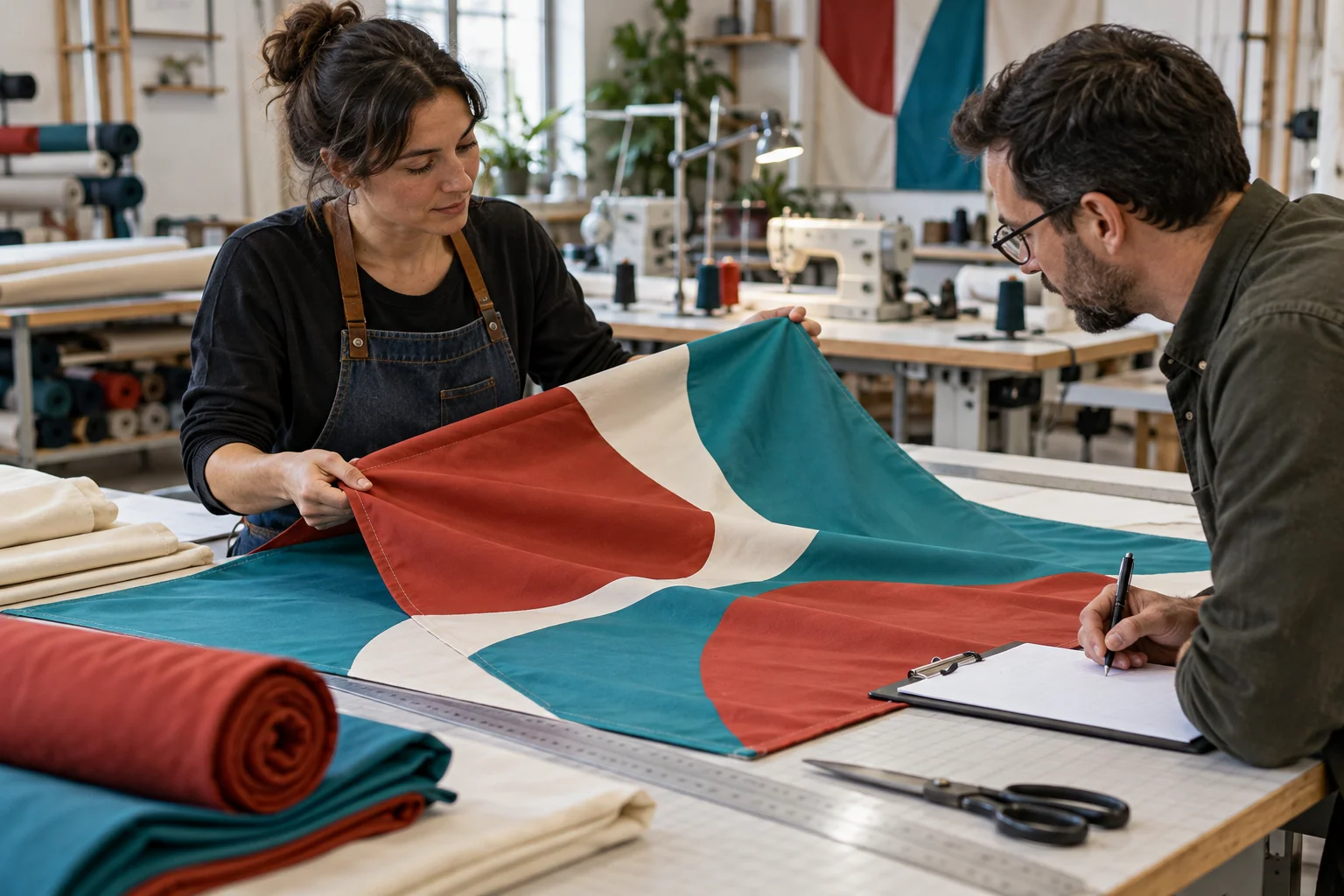
Ask about the actual production route
Describe the exact item, including printing, cutting, sewing and hardware needs. Ask which processes the proposed supplier manages directly and which involve another party. A factory photograph does not prove that every operation for your order happens at that location. Likewise, a trading business should not be dismissed simply because it coordinates production; the important question is whether it can take clear responsibility for the agreed result.
Look for accountable technical decisions
The party quoting should explain the proposed fabric, side construction, attachment and finishing in terms relevant to your use. If it needs to confirm an option with a production partner, that should be stated before commitment. Ask who approves substitutions or resolves a manufacturing question. A reliable process gives the buyer one controlled specification rather than allowing different parties to work from different assumptions.
Compare samples with the proposed order
Ask what an example or sample represents and whether it uses the same fabric and construction being quoted. Review dimensions, reverse appearance and attachment, not only print brightness. Where a physical sample is important, agree its scope and approval process. The ability to show many unrelated products is less useful than demonstrating how your particular flag will be specified, checked and identified when delivered.
Read commercial responsibility carefully
Confirm the legal contracting business, payment terms, delivery scope and process for raising discrepancies. Ask who communicates production changes and who signs off the final order details. Do not assume that dealing directly with a producer removes the need for a written specification, or that using a supplier means quality control is somebody else's problem. The accepted quotation should make responsibilities understandable without relying on a business label.
Choose the fit for your purchasing needs
Some buyers need one flag format, while others need a coordinated mix of flags, badges, apparel and event textiles. Evaluate who can manage that scope accurately and transparently. Orient Uniforms FZE can discuss the commercial products listed in this catalogue; ask for confirmation of the available construction and order process. No in-house manufacturing capability, material availability or delivery promise should be inferred unless it is specifically confirmed for the enquiry.
Questions & answers
Is buying from a manufacturer always cheaper?
No general rule applies. Compare the same complete scope, quantities and commercial terms rather than assuming a price advantage from the business description.
What is the most useful first question?
Ask who will be responsible for turning your approved specification into the delivered product and how artwork, production changes and inspection will be controlled.