
Why Do Companies and Organisations Use Flags?
Companies and organisations use flags to make an identity visible in a place where people gather or pass by. A flag can identify an entrance, distinguish a team, welcome delegates or connect separate parts of an event. Its effectiveness comes from a clear purpose and sensible positioning. A large graphic with no relationship to the visitor journey may attract attention without helping anyone understand where to go.
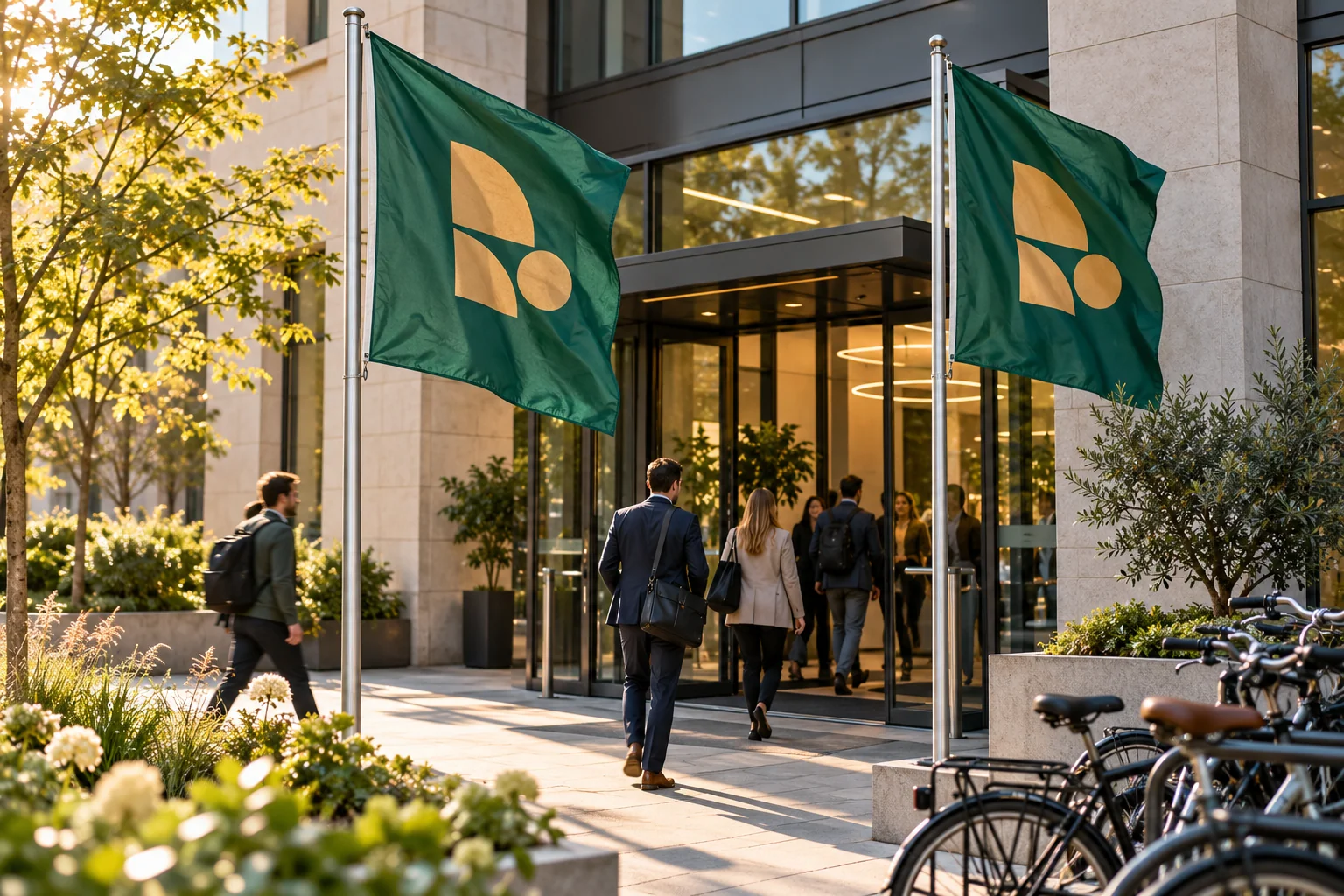
Make an entrance recognisable
An emblem repeated near a forecourt or reception can help visitors recognise the correct premises. This is useful when a building serves several businesses or the entrance sits back from the road. Check visibility from the actual approach and avoid blocking sightlines, access or safety information. The flag should support permanent signage, with a layout simple enough to recognise while moving.
Build belonging within an organisation
School house flags, sports-club pennants and corporate event displays can give participants a shared visual reference. Different departments or teams may need individual colours within one identity system. Agree which parts of the design stay constant and which can change. Keep a master artwork register so a later branch or event order does not introduce accidental logo variations.
Help people navigate an event
Flags can distinguish a registration point, meeting area, sponsor zone or activity entrance. In this role the message needs to be understood quickly, so choose concise wording and an appropriate viewing height. A symbol alone may not explain a destination to a first-time visitor. Coordinate placements with the organiser’s wider wayfinding plan, leaving accessible routes and emergency information unobstructed.
Support coordinated branding
A company may combine a pole flag, reception table flag and conference textile without printing identical artwork on every item. Keep the emblem, approved colours and tone consistent, then adapt proportions and content. Small desk products need different detail from tall outdoor displays. Use proofs at the intended scale to check that each piece feels like part of the same family.
Measure practical success
Define the intended result before selecting products: a clearer entrance, a visible meeting point or a coordinated presentation. Record where the display will stand, how often it will be used and who will store and maintain it. Share the relevant SKU pages and location photographs with Orient Uniforms FZE. A useful quotation should explain the proposed items and finishing without promising traffic, leads or a particular lifespan.
Questions & answers
Do flags replace permanent signs?
They can complement signs, but a temporary fabric display should not be relied on for required safety or access information.
Can branches use different sizes?
Yes. Maintain approved artwork references and create size-specific layouts so each display remains recognisable and readable.