
What Is Sublimation Printing in Flags? A Complete Beginner's Guide
Sublimation flag printing uses a compatible dye system and heat fixation to produce a graphic on suitable polyester fabric. It is used for commercial textile applications because it can reproduce detailed colour artwork on a flexible surface. The term describes a process, not a guarantee of identical colour on every cloth or indefinite outdoor life. The complete combination of fabric, ink, processing and finishing needs to suit the intended display.
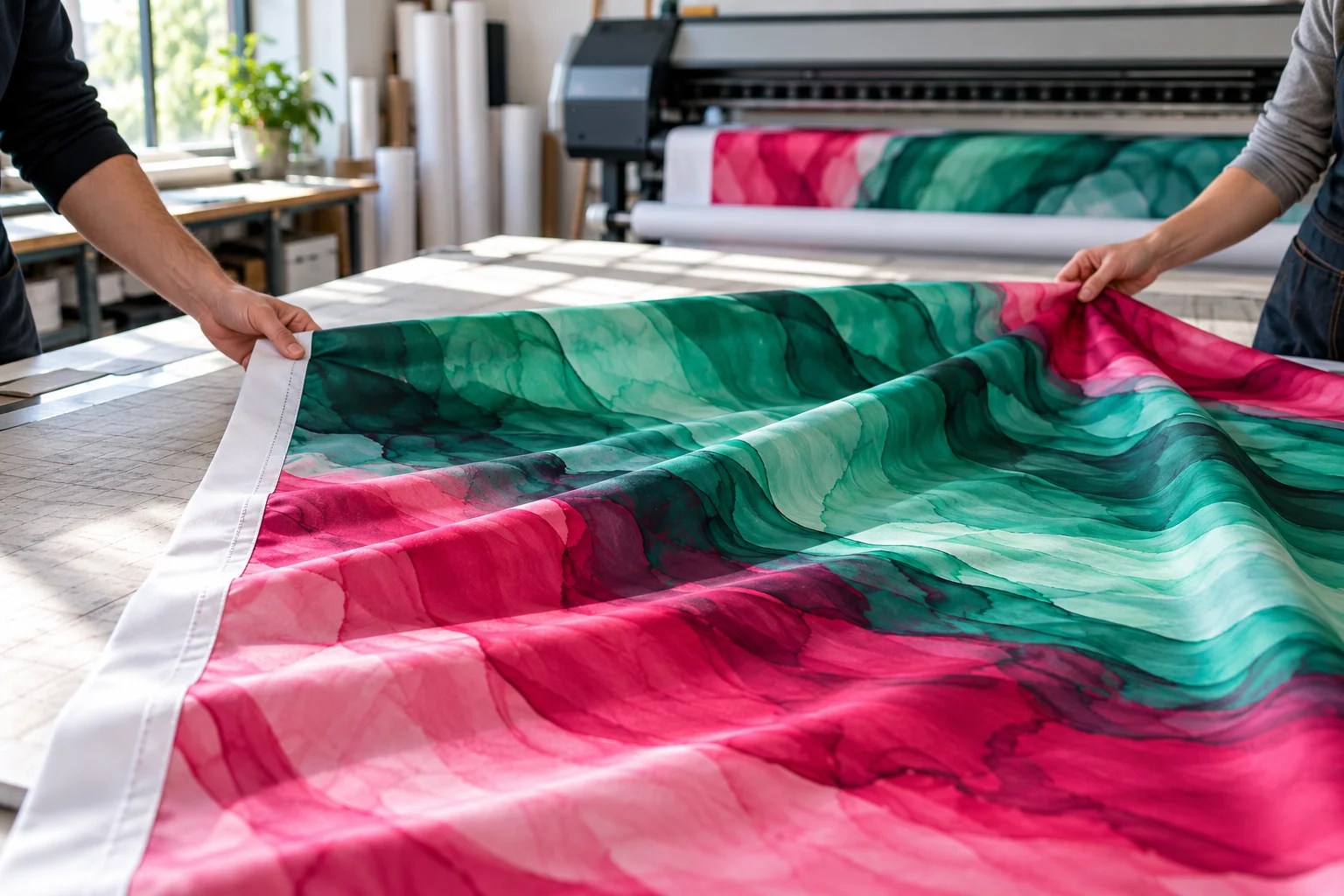
Two production routes
Transfer sublimation first places the image on suitable transfer paper; a heat process transfers it to the textile. Direct sublimation prints onto an appropriate fabric before fixation. Both routes depend on controlled production settings and compatible materials. Ask which approach is being proposed for the order if the reverse appearance or fine detail is important, rather than treating the process name as a complete specification.
Why the base cloth matters
The texture and openness of a textile influence how a printed graphic appears. A white or light base is normally considered for conventional sublimation colour reproduction. A sheer flag and a dense display cloth will not necessarily show the same colour or reverse visibility. Compare the proposed sample in the light where it will be used and keep the approved reference for repeat orders.
What happens to white and brand colours
An area intended to remain white normally depends on the base material rather than an added white layer in conventional sublimation. Bright monitor colours can also fall outside a particular print system’s achievable range. Supply the approved brand references and request a sample when a close colour match matters. Metallic-looking artwork on screen should not be assumed to become a metallic textile finish.
Choose the reverse view deliberately
A single printed layer may show a reversed version of the graphic through the cloth. Independently readable faces generally require a different construction, with implications for weight and movement. Explain whether people will approach from both directions and whether the design contains text. Ask for the precise construction and sample result; do not assume that a vivid front guarantees the reverse you need.
Order a finished flag rather than a process
Start with the catalogue format, SKU, dimensions and display location. Confirm the textile, attachment method, artwork, quantity and proofing requirements with Orient Uniforms FZE. The final quote should describe the finished product and any hardware as well as the printing. For outdoor use, ask for relevant product-specific guidance; sublimation alone does not establish UV resistance, wind suitability or a fixed replacement interval.
Questions & answers
Can any fabric be sublimated?
No. Compatibility must be checked for the specific textile and process; conventional flag sublimation commonly uses suitable polyester.
Will the flag look exactly like my screen?
Screens and printed textiles behave differently. Approve an appropriate sample when brand colour is important.